It's one of the most common questions in the estate, and it comes up the moment someone knocks a nail hole in a wall or scuffs a skirting board while moving a couch. The answer is in the Durkan Hawks Bay Home Owner Guide, but it's a single line in the suppliers table on page 15, which is not where anyone thinks to look.
Here's what the guide says, and what it's worth knowing before you head to the shop.
The spec
| Surface | Product | Finish | Colour |
|---|---|---|---|
| Walls & ceilings | Dulux Vinyl Matt | Flat, low sheen | Brilliant White |
| Timber (skirting, doors, architraves) | Dulux Satinwood | Mid-sheen satin | Brilliant White |
One small thing first: the guide spells the brand "Dulex". It's a typo — the brand is Dulux, and both product names are real Dulux lines. Worth knowing so you ask for the right thing at the counter.
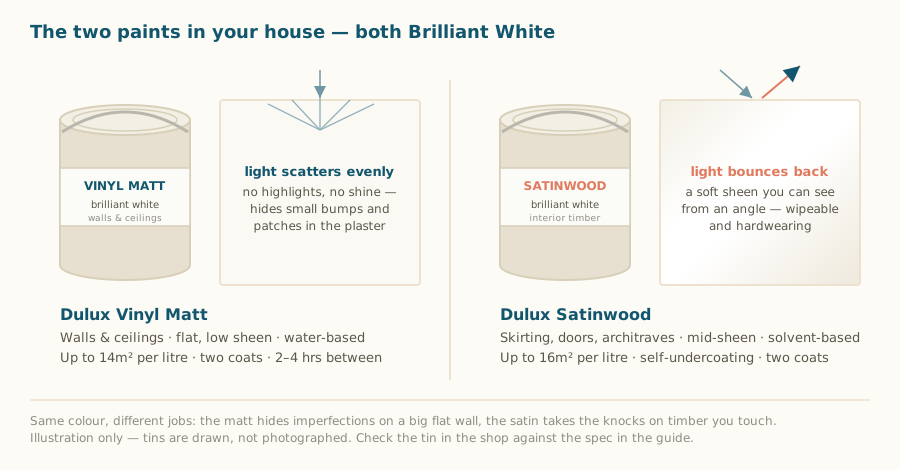
Walls and ceilings — Dulux Vinyl Matt
A water-based interior emulsion for walls and ceilings, giving a flat, low-sheen finish. It covers up to 14m² per litre, wants two coats, and takes two to four hours to dry between them.
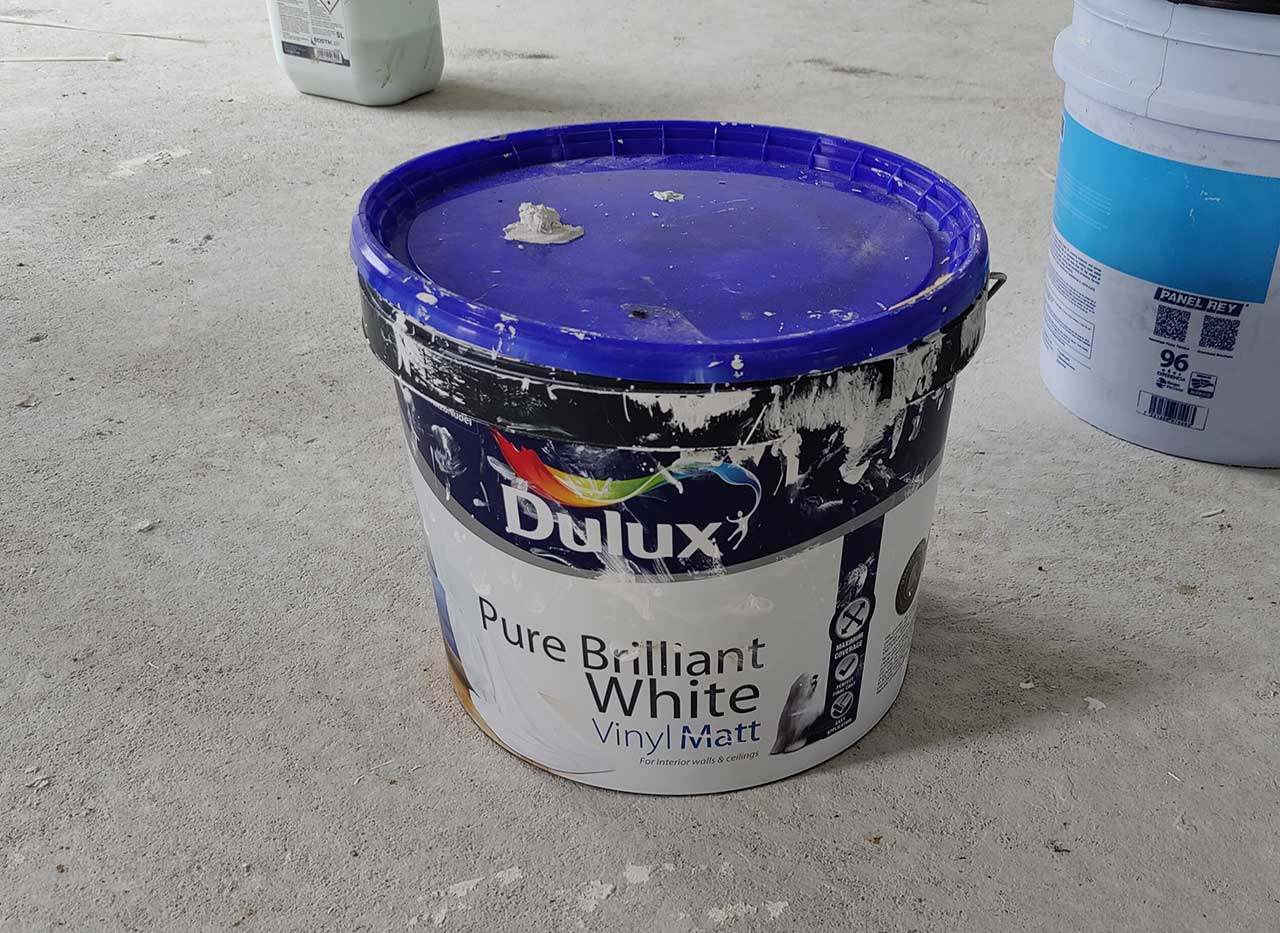
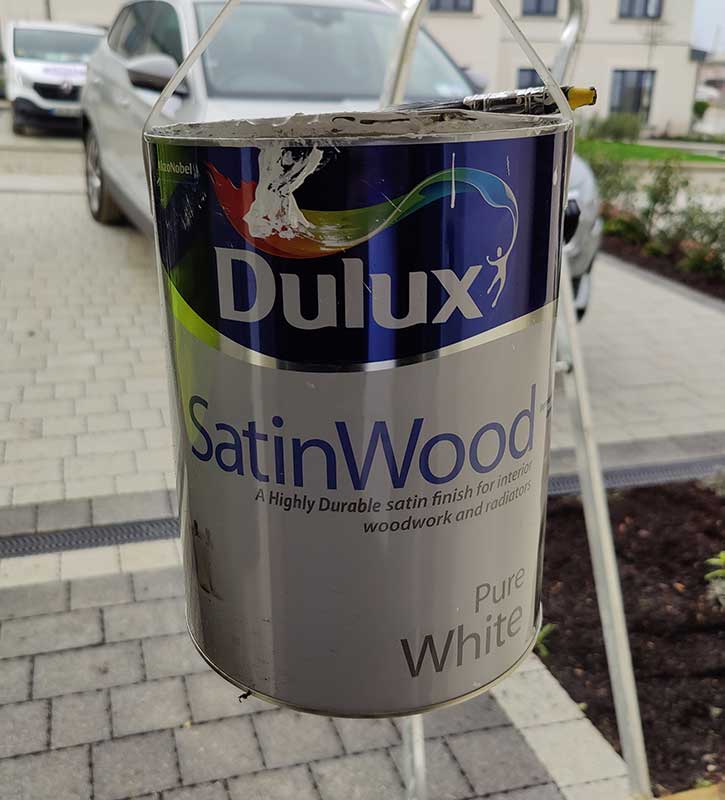
Timber — Dulux Satinwood
A mid-sheen satin for interior wood and metal — so your skirting, doors and architraves, and it works on radiators too. It's self-undercoating, which means no separate undercoat on already-painted timber, and it's washable and hardwearing, which is why it's on the surfaces that get knocked. Coverage is up to 16m² per litre, again two coats, two to four hours between.
Dulux's own advice, worth repeating: don't close freshly painted doors or windows, and don't turn radiators on, until the paint is fully dry.
Two things the guide doesn't tell you
The guide gives you the product and the colour, and stops there. Two gaps are worth knowing about before you spend money.
"Brilliant White" isn't the only white
Dulux sells White, Brilliant White and Pure Brilliant White, and they are genuinely different shades — subtly, but enough to see on a wall where new meets old. The guide says Brilliant White, so don't just reach for a tin marked "White" and assume you're grand.
Trade or retail?
Dulux runs two parallel ranges — the retail line, and Dulux Trade, aimed at professionals and sold through merchants and specialist paint shops. Both have a Vinyl Matt and a Satinwood. The guide doesn't say which one was used, and builders very commonly use Trade, but that's an educated guess and not something the document actually states. Worth asking about at the counter before you buy — and if an exact match matters to you, a test patch on a hidden bit of wall costs a lot less than a wall's worth of the wrong paint.
Why your touch-up doesn't match
Two things sabotage touch-ups, and neither is your fault.
On walls, matt emulsion patches show. A dab of the correct paint over a small repair frequently dries as a visible patch, because the fresh paint sits differently to paint that's been on the wall for a few years. The usual fix is to paint the whole wall, corner to corner, rather than spot-treating the middle of it.
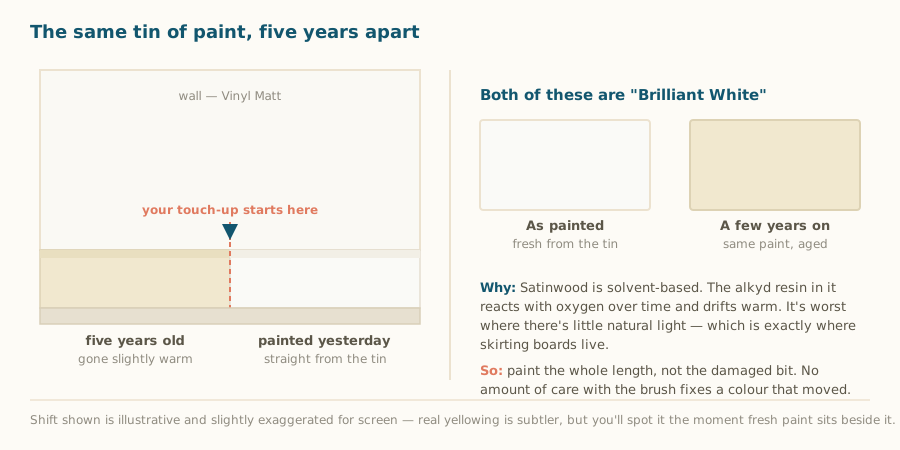
On timber, the paint has changed colour since it went on. Dulux Satinwood is solvent-based, and solvent-based whites yellow as they age — the alkyd resin in them reacts with oxygen over time. It's worse in spots that get little natural light, which is exactly where your skirting boards live. So a five-year-old skirting board and a fresh tin of the same paint genuinely aren't the same colour any more, and no amount of care with the brush will fix that.
Water-based satinwoods (Dulux's AquaMax and Quick Dry lines, among others) don't yellow. That makes them a better bet if you're doing a whole room and want it to stay white — but a worse one for patching in against existing timber that's already gone slightly warm, because your repair will look too white. Whole surface, or live with it.
Where to get it
Good news: both are stocked locally, and neither is a specialist order.
O'Reilly Hardware & DIY
The hardware shop on Abbey Street in town, and the obvious first stop. They've been at it since 1974 and describe themselves as the east coast's number one paint supplier, which makes the counter there worth a question or two rather than guessing off a shelf — particularly if you want to check whether you're buying the Trade or the retail line, or want a colour matched against what's already on your walls.
- Address: Abbey Street, Wicklow Town, A67 NN25
- Phone: 0404 32614
- More info: experthardware.ie
Everywhere else
These are mainstream products, so most DIY shops carry them — Woodie's included, if you're already heading that direction for something else (see Garden Centres & DIY for that run). The Dulux store finder will list anywhere else near your Eircode.
A few practical tips
- Check your house actually matches the spec. The guide describes what Durkan painted. If you bought with upgrades, a previous owner redecorated, or you've painted a room yourself since, the tin you need is whatever's on the wall now — not what's in the manual.
- If your house is still new, hold off on redecorating. The guide asks that the heating be kept as low as possible for at least six months while the house dries out, specifically to stop the paintwork cracking, and warns that shrinkage cracks in plasterwork during this time are normal settlement rather than defects. Painting over a wall that's still moving means doing it twice. There's more on the drying-out period in Yearly Home Maintenance.
- Do the whole wall, not the patch — it's more paint but far less annoying than a wall with a visible smudge you'll notice every single day.
- Keep a labelled tin. A small amount of each, with the room written on the lid, saves the whole question next time. Handy for filling nail holes after a hunt for the fixing points in an ICF wall.
- Two coats means two coats. Both products are specified that way, and Brilliant White over a repair is exactly where one coat shows through.
Compiled from the Durkan Hawks Bay Home Owner Guide (Section 3, Building Suppliers Contact List) and Dulux's own published product information. The guide records the original build spec — always confirm against what's actually on your own walls, and check the current product details with the manufacturer or a decorator merchant, as ranges and formulations change. If you spot anything outdated here, let a committee member know so we can update this page.